teflon rubber hose chemistry
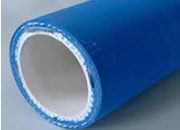
Teflon Vs PTFE What Really Are The Differences?
In a world full of acronyms, trade names and technical jargon, it can be hard to know what’s what sometimes. If you’re wondering what the difference is between PTFE and Teflon, and who would win between Teflon vs PTFE, let’s explore these materials and see what makes them unique.
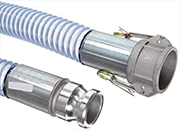
Hosecraft USA Chemical Hoses of Every Style
TR3 FEP RUBBER COVERED HOSE The TR3 FlexChem is a versatile, rubber covered FEP-lined transfer hose. This smooth bore FEP hose with its smooth EPDM rubber cover is easy to handle and resists abrasion and chemical attack while it facilitates easy cleanability.
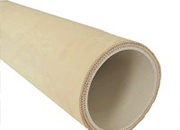
PureFlex | FlexChem Series, smooth bore FEP hose with its
The smooth, rubber cover makes it easy for operators to safely grip and handle the hose. FlexChem hose incorporates a FEP, smooth bore design which gives it superior flexibility. Through a proprietary process, the FEP liner is bonded, covered and reinforced with multi-layered rubber, spiral-wound polyester cords and a double helix wire which gives it superior flexibility.
Teflon Vs PTFE What Really Are The Differences?
In a world full of acronyms, trade names and technical jargon, it can be hard to know what’s what sometimes. If you’re wondering what the difference is between PTFE and Teflon, and who would win between Teflon vs PTFE, let’s explore these materials and see what makes them unique.
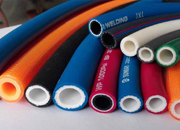
Teflon Vs PTFE What Really Are The Differences?
In a world full of acronyms, trade names and technical jargon, it can be hard to know what’s what sometimes. If you’re wondering what the difference is between PTFE and Teflon, and who would win between Teflon vs PTFE, let’s explore these materials and see what makes them unique.
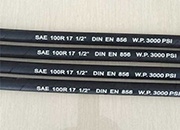
PTFE Hose/Teflon Hose
PTFE (Polytetrafluoroethylene), commonly known as Teflon, is a kind of polymer which is polymerized with tetrafluoroethylene as monomer. It is white waxy, translucent, heat-resistant and cold resistant. It can be used for a long time at -180℃ ~ +260℃. This material has the characteristics of acid and alkali resistance and resistance to
Chemical Compatibility Reference Chart
PVC and rubber hose formulations to withstand specific chemicals. NOTE: The ratings in the chart DO NOT reflect the extent to which extraction may occur or the extent to which fluids may undergo any physical changes in properties or composition as a result of coming into contact with the hose.
News - THE DIFFERENCE BETWEEN PTFE HOSES AND …
When upgrading your engine compartment or fuel system, it is difficult to know exactly which type of hose you need. With so many hoses on the market, you may encounter problems, choose the right material PTFE hoses for your desired appliion. The ptfe hose manufacturer aims to help you understand the difference between PTFE and rubber hoses so that you can choose the right one for you
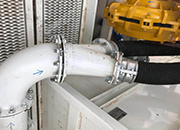
ELAFLEX | Flowcon Industrial - Johannesburg Branch
Chemical & Solvents Rubber Hose. For use in Chemical, Food & Solvents appliions, safety factor 4:1, anti-static, OHM conductive stripe, high steaming temperature. Approvals: FDA, EX 0/1/2 Zones, EN12115, TRbF 131/2, EN10204-3.1. Elaflex has a comprehensive range of chemical & solvents hoses to suit any appliion.
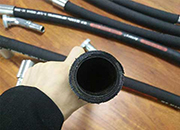
Teflon PTFE Chemical Compatibility Reference Chart
What Chemicals are Compatible with PTFE and Teflon®*? Low temperature: maintains high strength, toughness and self-lubriion as low as 5°K (-268°C /-450°F) and good flexibility at 194°K (-79°C / -110°F) PTFE Chemical Compatibility Chart: Polytetrafluoroethylene is very non-reactive and ideal for use with most chemicals.
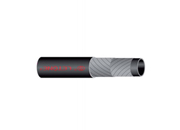
Teflon Division – US Hose & Coupling
Home Teflon Division. Compared to its industrial rubber hose peers, Stainless Steel Braided Teflon (PTFE) Hose boasts a much more robust tube construction that stands up to the corrosiveness of chemicals, such as Chlorine and its derivatives. A workhorse in tight spaces, side by side with metal hose, the flexibility of Teflon cannot be beat.
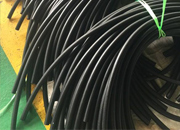
Looking for a Teflon rubber covered chemical suction hose
21.10.2018· ContiTech Chem Superior FEP Teflon chemical transfer hose provides the same working pressure rating (200PSI), the same full vacuum rating (29” HG) and more than twice the flexibility - while managing to be only 1/3 the price per foot of their previous …
PTFE Hose/Teflon Hose
PTFE (Polytetrafluoroethylene), commonly known as Teflon, is a kind of polymer which is polymerized with tetrafluoroethylene as monomer. It is white waxy, translucent, heat-resistant and cold resistant. It can be used for a long time at -180℃ ~ +260℃. This material has the characteristics of acid and alkali resistance and resistance to
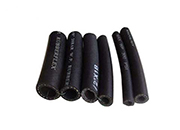
Jack Chem Teflon Hose
Jack-Chem Smoothbore Teflon Rubber Covered Hose. Jack-Chem has been custom engineered for lasting service in the most demanding appliions. Jack Chem is constructed with a smooth; non-stick FDA approved white FEP fluoropolymer liner. (PTFE and PFA liners can be custom ordered.) Two plies of synthetic rubber reinforced with horizontal fabric
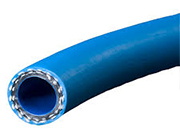
Metal Hose | Teflon Hose | PTFE Hose | Corrugated Metal Hose
PTFE & Metal Hose. Overcomes temperature extremes, high pressures, and harsh chemicals. Summers Rubber Company’s composite Hose is available in a complete range of advanced films and fabrics and excellent for use in petroleum, chemical and oil transfer, petrochemical vapor recovery, as well as tank truck delivery. At the heart of Summers Rubber Company’s success is our in-house …
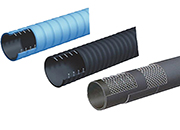
PureFlex | Ultra-Pure and Chemical Resistant Hoses and
PureFlex fittings and collars are manufactured specifically for FEP and plastic-lined hoses. Applying the highest quality standards, they are designed for compatibility with most manufacturers'' true-bore plastic hoses including smooth bore, convoluted, cuffed, and rubber covered plastic lined.
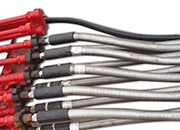
PureFlex | Ultra-Pure and Chemical Resistant Hoses and
PureFlex fittings and collars are manufactured specifically for FEP and plastic-lined hoses. Applying the highest quality standards, they are designed for compatibility with most manufacturers'' true-bore plastic hoses including smooth bore, convoluted, cuffed, and rubber covered plastic lined.
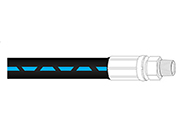
Teflon Division – US Hose & Coupling
Home Teflon Division. Compared to its industrial rubber hose peers, Stainless Steel Braided Teflon (PTFE) Hose boasts a much more robust tube construction that stands up to the corrosiveness of chemicals, such as Chlorine and its derivatives. A workhorse in tight spaces, side by side with metal hose, the flexibility of Teflon cannot be beat.
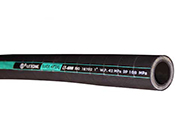
Teflon PTFE Chemical Compatibility Reference Chart
What Chemicals are Compatible with PTFE and Teflon®*? Low temperature: maintains high strength, toughness and self-lubriion as low as 5°K (-268°C /-450°F) and good flexibility at 194°K (-79°C / -110°F) PTFE Chemical Compatibility Chart: Polytetrafluoroethylene is very non-reactive and ideal for use with most chemicals.
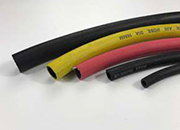
Teflon Division – US Hose & Coupling
Home Teflon Division. Compared to its industrial rubber hose peers, Stainless Steel Braided Teflon (PTFE) Hose boasts a much more robust tube construction that stands up to the corrosiveness of chemicals, such as Chlorine and its derivatives. A workhorse in tight spaces, side by side with metal hose, the flexibility of Teflon cannot be beat.
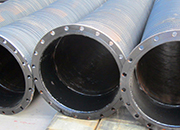
What is rubber tubing used for in chemistry?
21.02.2020· A hydraulic hose is a high-pressure, synthetic rubber, thermoplastic or Teflon reinforced hose that carries fluid to transmit force within hydraulic machinery. When was rubber pipe invented? In 1821, James Boyd patented his invention for rubber-lined, cotton-webbed fire hose.
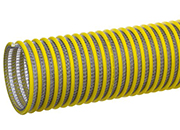
PTFE Braided Hose , 1 Inch Braided Hose For Conveying
High quality PTFE Braided Hose , 1 Inch Braided Hose For Conveying Various Chemicals from China, China''s leading Braided Teflon Hose service, with strict quality control Teflon Braided Hose factories, offer high quality Teflon Braided Hose Service.
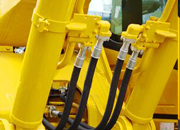
Plain PTFE Teflon Hose – Transflex Industries
Plain PTFE Teflon Hose. The hose are good resistance against all chemicals, acids and caustic solutions of any concentration. Exceptions : Liquid Alkali metals and fluoride compounds. Fluid Compatibility : Inert to all aircraft hydraulic fluids, fuels, lubricants, coolants, and water systems, Non-toxic, odorless and tasteless.
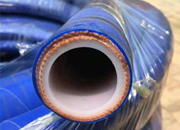
Manufacturers & Distributors of couplings hoses - Vikram & Co.
Composite hoses are used in Petro chemical industry & in storage tanks to load/unload liquid from ship to shore & shore to ship. Teflon Hoses are used in chemical industry due to its inertness to virtually all chemicals & light weight. Thermoplastics and thermoplastic materials …
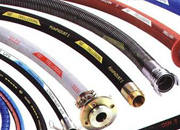
Teflon Vs PTFE What Really Are The Differences?
In a world full of acronyms, trade names and technical jargon, it can be hard to know what’s what sometimes. If you’re wondering what the difference is between PTFE and Teflon, and who would win between Teflon vs PTFE, let’s explore these materials and see what makes them unique.
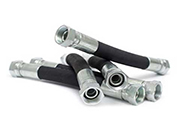
Specialty & Metal Hose – Hampton Rubber Company
Overcomes temperature extremes, high pressures, and harsh chemicals. Hampton Rubber Company’s composite Hose is available in a complete range of advanced films and fabrics and excellent for use in petroleum, chemical and oil transfer, petrochemical vapor recovery, as well as tank truck delivery. Met to your specifiions and by our trained professionals.
PTFE hose What Is It Why is PTFE hose better than rubber
27.07.2018· Polytetrafluoroethylene, or PTFE for short, is one of the common names for Teflon. PTFE hose is used in stainless steel hose so the hose lasts much longer than rubber hose or rubber encased in stainless steel. It has many benefits over rubber products. Benefits of Using PTFE Nylon braided hose – PTFE – helps to … Continue reading "PTFE hose What Is It Why is PTFE hose better than rubber"
Teflon Hoses - CJan Fluid Technology Co., Ltd.
The Features of Teflon Tube Include. 1. High chemical stability and high resistance to corrosion: PTFE Flexible Hose can handle approximately all chemicals, such as aqua regia,98% sulfuric acid, Hydrochloric Acid, 98% nitric acid, strong Oxidizing agents, …
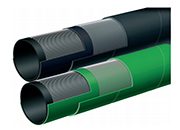
Metal & PTFE Hose - Smith Industrial Rubber and Plastics
Metal and PTFE Hose. Overcomes temperature extremes, high pressures, and harsh chemicals. Smith Industrial’s composite Hose is available in a complete range of advanced films and fabrics and excellent for use in petroleum, chemical and oil transfer, petrochemical vapor recovery, as well as tank truck delivery. Met to your specifiions and by our trained professionals.
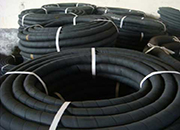
Plain PTFE Teflon Hose – Transflex Industries
Plain PTFE Teflon Hose. The hose are good resistance against all chemicals, acids and caustic solutions of any concentration. Exceptions : Liquid Alkali metals and fluoride compounds. Fluid Compatibility : Inert to all aircraft hydraulic fluids, fuels, lubricants, coolants, and water systems, Non-toxic, odorless and tasteless.