air compressor hose safety
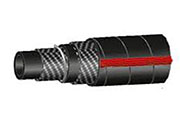
Air & Multipurpose Hoses < Industrial Hoses < Fluid
Benefits & Features. Our high-quality air hoses for pneumatically-operated units and tools are finely tuned to the requirements of the specific industrial appliion. They are resistant to aging, weathering and oils, and are thus suitable for the transport of air that contains oil. High flexibility and a hose outer coating with smooth surface
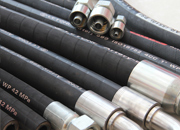
Compressor & Hose Safety — DrillSafe
Compressor and air hose safety series PART 1: RISKS ASSOCIATED WITH COMPRESSORS AND AIR HOSES. Compressors and boosters are an indispensable part of the drilling industry. Compressed air is used to drive downhole hammers and is typically reticulated through flexible hoses to operate some sort of hand held tool. Each one of these components, the compressor, the air hose and the tool …
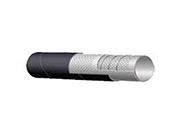
Air & Multipurpose Hoses < Industrial Hoses < Fluid
Benefits & Features. Our high-quality air hoses for pneumatically-operated units and tools are finely tuned to the requirements of the specific industrial appliion. They are resistant to aging, weathering and oils, and are thus suitable for the transport of air that contains oil. High flexibility and a hose outer coating with smooth surface
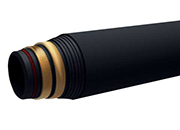
7 Tips for Compressed Air Safety - Moffitt Corporation
Air blown into the mouth that can rupture the esophagus or the lungs. (takes only 5 PSI) Loud sounds from an air hose can lead to hearing loss or damage. (Sounds can reach 120-130 dB. Well above OSHA’s 90 dB permissible exposure limit.) Taking the relevant safety precautions should protect you from any hearing loss or damage.
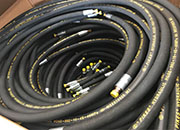
Whip Checks (Air hose safety cables) - VESI
Hoses and components The following safety precautions are to be taken in regards to air hoses: • Ensure all hoses and components are appropriately rated to handle the maximum operating pressure of the air compressor. • Ensure that hoses are protected from mobile plant and vehicle traffic with suitable positioning or cover ramps. • Always release the pressure in air hoses and tools prior
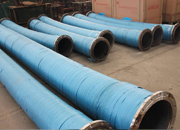
Anti-hose whip safety valve hoseguard 1 (f-f) npt 236 scfm
TOPRING anti-hose whip safety valves satisfy this standard. • *** ISO 4414-11 (5.4.5.11.1): “When failure of a hose assely or plastic piping constitutes whiplash hazard, it shall be restrained or shielded by suitable means and/or an air fuse for compressed air shall be mounted.” • Data for closing point (+/- 10 %) and other PSI available
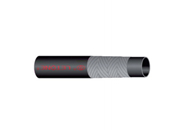
OSHA COMPRESSED AIR SAFETY SHUT-OFF VALVE - Hose Reels
OSHA COMPRESSED AIR SAFETY SHUT-OFF VALVE PREVENTS DANGEROUS HOSE WHIP Protect your most important assets: Your employees and their equipment! OSHA safety STANDARD regulation 29CFR CHXVII PARAGRAPH1926.302(b)(7) STATES: All hoses exceeding 1/2-inch inside diameter shall have a safety device at the source of supply or branch line to reduce pressure in case …
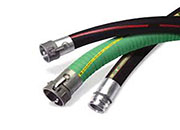
Air Hose Safety - Capital Rubber Corp
An OSHA compliant safety check valve at the air source (compressor, manifold, or air receiver) will sever the air flow if a surge is recognized. A surge in air volume signals that a hose is severed. Once the air beyond the check valve escapes, the hose lays limp rather than hazardously flying around until it can be captured. Hose safety whip check cables, choker cables, or nylon safety
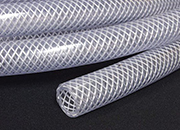
OSHA Air Compressor Safety Valves | Compressor Check Valves
COMPRESSED AIR SAFETY SHUT-OFF VALVES offer simple but efficient protection to pneumatic (compressed air) systems in the event of a broken compressed air hose. It is a very dangerous situation when an air hose breaks and causes the hose to whip around. 2. Required by OSHA: OSHA air compressor safety STANDARD regulation: Conforms to OSHA regulation 1926.302 (b) (7) requiring …
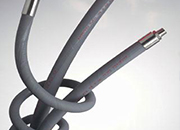
Air Compressor Safety | Working Safely with Compressed Air
23.09.2015· There are also air compression safety tips and procedures for particular parts of the compressor. Three of these components include the pressure regulation devices, air receivers and distribution lines. Each of these is significant in maintaining a healthy machine and operating it safely. Pressure Regulation Devices . Valves: Ensure that the safety valves on your air tank are set to at …
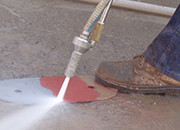
Compressor & Hose Safety — DrillSafe
Compressor and air hose safety series PART 1: RISKS ASSOCIATED WITH COMPRESSORS AND AIR HOSES. Compressors and boosters are an indispensable part of the drilling industry. Compressed air is used to drive downhole hammers and is typically reticulated through flexible hoses to operate some sort of hand held tool. Each one of these components, the compressor, the air hose and the tool …
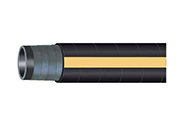
2 Compressed Air Safety Guidelines
Safety Guidelines 1. Never apply compressed air to the skin or direct it at a person. Even air at a pressure of 15 psig can cause serious injury. Never use a compressed air hose to clean dirt or dust from your clothing or body. 2. When using compressed air for cleaning purposes, ensure pressure does not exceed 30 psig (per OSHA regulations). Always use goggles or a face shield over approved
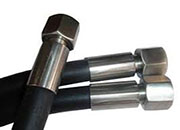
Compressed Air: 5 Associated Injuries and How to Stay Safe
18.04.2019· Compressed Air: 5 Associated Injuries and How to Stay Safe. While compressed air is relatively safe compared to many other sources of power, especially electricity, there are still safety issues that need to be considered with using compressed air. Here Nex Flow shares 5 injuries associated with compressed air operations and how to steer clear
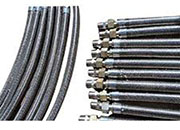
Safe Operating Procedures SOP 08 Air Compressor
9. Compressed air cleaning of machine parts must only be undertaken after all PPE and general workshop safety precautions have been observed. 10. Never use the compressed air to clean down work benches, floors or dust from clothing. 11. Never kink or cut off an air hose to restrict the flow of air. 12. Never direct compressed air towards the
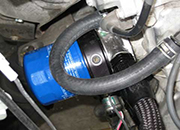
Requirements for breathing air hoses - CEJN
Even though a compressed air hose technically can be connected to a breathing air device, it does not mean that it is safe to use due to its purpose. Still, this is quite commonly seen despite the extensive safety requirements of a true breathing air hose. Being aware of the differences between a compressed air hose and a hose intended for breathing air is vital. When referring to compressed
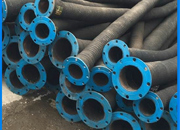
Safe management of air compressor hose lines
16.03.2021· Safe management of air compressor hose lines 16 Mar 2021. Christian Wieczorek, A.S.T. Bochum and Roland Herr, Technical Journalist. The problem of connecting hose lines to modern high-pressure air compressors is well known. Following a nuer of hazardous events and fatal accidents, the industry has developed a high-pressure layflat hose system with dedied coupling connectors. …
30 Second Guide How To Fix A Leaky Air Compressor Hose
21.12.2020· How to fix a leaky air compressor hose (30 sec) The first task is to determine where the hose is leaking. If you find the leak, cut it on both sides of the marked area with a sharp knife. It is important to use a sharpened blade so that the hose was not corrupt. Now insert the ring into the tube that becomes two screws.
Air Hose Safety - Capital Rubber Corp
An OSHA compliant safety check valve at the air source (compressor, manifold, or air receiver) will sever the air flow if a surge is recognized. A surge in air volume signals that a hose is severed. Once the air beyond the check valve escapes, the hose lays limp rather than hazardously flying around until it can be captured. Hose safety whip check cables, choker cables, or nylon safety
Dangers of blowing with air blow guns for compressed air
1. A ir eolism, when compressed air enters the bloodstream. T he first is an air eolism, which can occur if compressed air enters the bloodstream. This can occur if the operator is blowing compre ssed air on themselves or someone else. If the pressure becomes too great or the compressed air is blown directly against the body, the compressed
What are the basics of compressed air safety nozzles?
13.12.2019· What are the basics of compressed air safety nozzles? Figure 1. The safety tip of this nozzle is broken off allowing 100 psi compressed air to be available at the tip, making it a hazard the breaks OSHA standards. In any manufacturing plant, there is an assortment of blowing nozzles where compressed air is used to clean product or debris.
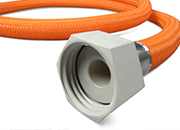
Safe management of air compressor hose lines
16.03.2021· Safe management of air compressor hose lines 16 Mar 2021. Christian Wieczorek, A.S.T. Bochum and Roland Herr, Technical Journalist. The problem of connecting hose lines to modern high-pressure air compressors is well known. Following a nuer of hazardous events and fatal accidents, the industry has developed a high-pressure layflat hose system with dedied coupling connectors. …
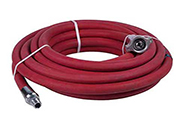
Compressed Air Hose Safety - Safety Toolbox Talks Forum
Compressed Air Hose Safety was created by Safety Toolbox Talk Webmaster. Compressed air is a very useful thing however it can be dangerous and must be used in a safe manner. Here are some tips when using a compressed air. General Use. Keep air hose off the floor where it is a trip hazard and subject to damage by trucks, doors, and dropped tools.

workplace hose safety | McGuire Air Compressors'' Weblog
07.11.2012· Reels may be spring rewind, manual hand rewind, or in cases of very heavy, long hoses- motorized reels work best. Five Reasons to use Air Hose Reels: 1. Efficiency. – Hose reels make all your hose handling more efficient. – An organized, clean workplace is proven to be more efficie. – Maintaining hose within easy reach saves time and money.
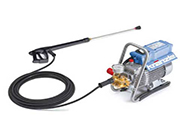
PVC Pipes and Compressed Air Hoses With Water Hose Clamps
04.07.2016· Water Hose Clamps Used For Compressed Air Hose Connections. Another very common hazard that I run across during inspections at both manufacturing and construction work-sites is the use of water hose clamps (aka worm-driven hose clamps)to splice compressed air hoses, as well as to connect compressed air hoses to quick couplers and other hose fittings. OSHA Construction …
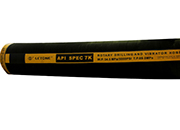
Safe management of air compressor hose lines
16.03.2021· Safe management of air compressor hose lines 16 Mar 2021. Christian Wieczorek, A.S.T. Bochum and Roland Herr, Technical Journalist. The problem of connecting hose lines to modern high-pressure air compressors is well known. Following a nuer of hazardous events and fatal accidents, the industry has developed a high-pressure layflat hose system with dedied coupling connectors. …
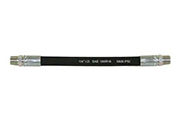
Compressed Air Safety – 5 Hazards to Avoid | Creative
22.12.2014· 5 Compressed Air Safety Hazards 1. Compressed Air is not a Toy. In a perfect world where people practiced common sense, this hazard would not be present. Unfortunately, that is not the world we live in. There are many times when people use the compressed air hoses as something like a toy, which can actually cause many serious injuries.
Toolbox Talk # 1.21 – Take Care with Compressed Air
01.02.2019· Never point a compressed air hose nozzle at any part of your body or another person. Never use compressed air for a practical joke. Never look into the "business end" of a compressed air tool. Never use compressed air for cleaning work clothes or machinery. Keep air hoses out of aisle ways where they can be damaged by traffic or be a tripping hazard. Compressed air tools are safe …
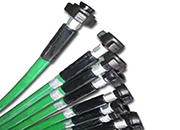
Do you meet OSHA’s guidelines for workplace hose safety
19.12.2008· Hose Reels offer an effective and practical solution to minimizing potential accidents, while increasing safety and efficiency in all types of industries. Ask a Question: What does OSHA say about workplace hose safety? Answer: An OSHA guideline publiion states: “Hoses, cables, and other equipment shall be kept clear of passageways, ladders and stairs.”
Compressor & Hose Safety — DrillSafe
Compressor and air hose safety series PART 1: RISKS ASSOCIATED WITH COMPRESSORS AND AIR HOSES. Compressors and boosters are an indispensable part of the drilling industry. Compressed air is used to drive downhole hammers and is typically reticulated through flexible hoses to operate some sort of hand held tool. Each one of these components, the compressor, the air hose and the tool …
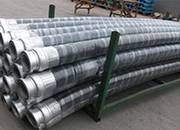
Toolbox Talk # 1.21 – Take Care with Compressed Air
01.02.2019· Never point a compressed air hose nozzle at any part of your body or another person. Never use compressed air for a practical joke. Never look into the "business end" of a compressed air tool. Never use compressed air for cleaning work clothes or machinery. Keep air hoses out of aisle ways where they can be damaged by traffic or be a tripping hazard. Compressed air tools are safe …