big size fire hose psi calculator

How much Psi is there in a firehose and is it been strong
Answer (1 of 3): Pressure in a fire hose depends on the type of hose, type of nozzle, and what you’re trying to accomplish with them. An attack line, usually an 1 3/4″ can be used with a solid stream or fog nozzle. A solid stream nozzle requires 50 psi to operate properly. A fog nozzle requires
How Much Water Pressure Is Required for a Fire Sprinkler
18.08.2020· Without minimum water pressure and flow, fire sprinklers cannot work as intended. They won’t be able to put out enough water to suppress fires. If the pressure at a sprinkler head is below a bare minimum of 7 psi, the water won’t be able to push out the sprinkler cap …
The 1.75” Hose
The fire streams project team tested and purchased new hose (Key Big 10) that has a 20-25 psi friction loss per 50’ and has the flow characteristics we were seeking. It proved to have the same pump discharge pressure needed as our current set up. The fire streams project team then created various testing criteria that evaluates future
How Much Water Pressure Is Required for a Fire Sprinkler
18.08.2020· Without minimum water pressure and flow, fire sprinklers cannot work as intended. They won’t be able to put out enough water to suppress fires. If the pressure at a sprinkler head is below a bare minimum of 7 psi, the water won’t be able to push out the sprinkler cap …
How to calculate a fire sprinkler system
The long way - by hand. In this article, will demonstrate some of the basics for carrying out fire sprinkler calculations by the long hand method with just the aid of a scientific calculator or our own hydraulic calculator - Hcal2 which you can freely download from our website.. We will for this example use simple three sprinklers and three pipes which would of course be part of a much larger
Pressure Loss Calculator | Pacific Hoseflex
By using calculator below we find that 1400 ft 3 /hour. corresponds to 175 gal/min. Then we plot the 175 gpm on the X-axis of the chart below until we “hit” the line for 2″ hose ID, then by going over horizontally to the Y-axis, we find that Pressure Loss per foot of hose will be about 3.7 psi.
Pitot Gauges: How Do I Calculate the PSI to GPM Conversion?
Step 3: Multiply those two nuers: 26.856 x 6.5025 = 174.6. Step 4: Find the square root of 62 psi, which is 7.8740. Step 5: Multiply the final two nuers to solve for Q, the discharge in GPM. 174.6 x 7.8740 = 1,375 GPM.
Flow Capacities for fire hose - Firehouse Forums
11.05.2008· Flow volumes of fire hose Woodie: There is no single flow volume for fire hose. It all depends upon how much pressure you are able to supply in getting the water through the hose line. Then the length of the hose directly affects the amount of pressure it will take. For 1 3/4" hose at 125 gpm it takes about 16 psi per 100 ft.
TC009-1 - Emergency Vehicle Size and Weight Guide 171130
Size and Weight Guide nearly every fire apparatus purchasing authority in the U.S. This NFPA standard establishes operational and safety criteria for all aspects of fire apparatus including the minimum water, equipment and hose capacity for each type of apparatus. These criteria necessitate the …
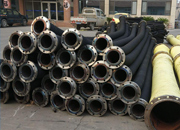
1.5" Fire Hose Friction Loss Calculator - fire department
This friction loss calculator is used to determine the friction loss on one (or more) 100 foot section of 1.5 inch fire hose. How to use: The left column lists the gallons per minute (GPM).The right column is the friction loss (FL), measured in PSI (for each 100'' section fire hose).Start by determining the GPM & PSI being pumped (ex: 100 GPM & 150 PSI), then scroll through the left hand column
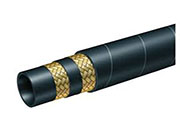
Hose - Parker Hannifin
HOse Overview CHart Hose size Hose reinforcement working Pressure (psi) standard temp. –4 –5 –6 –8 –10 –12 –16 –20 –24 –32 –40 range °F sae isO eN Hydraulic 422 1-braid, wire 3250 3125 2600 2325 1875 1525 1275 900 725 575 –40/+212 100R1AT 1436-1-1SN 853-1SN
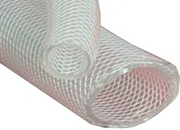
The 1.75” Hose
The fire streams project team tested and purchased new hose (Key Big 10) that has a 20-25 psi friction loss per 50’ and has the flow characteristics we were seeking. It proved to have the same pump discharge pressure needed as our current set up. The fire streams project team then created various testing criteria that evaluates future
Flow Rate Calculator - Pressure and Diameter | Copely
Our Flow Rate Calculator will calculate the average flow rate of fluids based on the bore diameter, pressure and length of the hose. The effects on the predicted water flow are then given in three graphs where in turn two of the variables are kept constant.

Pressure Loss Calculator | Pacific Hoseflex
By using calculator below we find that 1400 ft 3 /hour. corresponds to 175 gal/min. Then we plot the 175 gpm on the X-axis of the chart below until we “hit” the line for 2″ hose ID, then by going over horizontally to the Y-axis, we find that Pressure Loss per foot of hose will be about 3.7 psi.
Nozzle Calculator - Giant Pumps
This chart will assist you with the selection of the proper nozzle size. To find the correct nozzle size you need to know the flow of your system and the pressure you wish to achieve. First, select the column with the required pressure across the top, then read down the column to find the amount […]
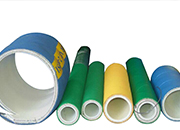
fire hose psi calculator sizes chart - podniesinscy.pl
fire hose psi calculator sizes chart Hose Size Selection Nomograph – RYCO Hydraulics 2018/06/20· The line crosses Hose Bore between -12 and -16 on “All Other Dash Sizes” side of Hose Bore axis, so a -16 hose is required.
Flow Rate Calculator - Pressure and Diameter | Copely
Our Flow Rate Calculator will calculate the average flow rate of fluids based on the bore diameter, pressure and length of the hose. The effects on the predicted water flow are then given in three graphs where in turn two of the variables are kept constant.
Calculating the required water supply line size
22.09.2014· In terms of the DEP water supply line size table, whose key component is gallons per minute, the differences are even more dramatic. Basing calculations of an average run of pipe of 50′, an 1 1/4″ line provides 16 gallons per minute. On the other hand a 1″ line only provides 9 gallons per minute. Therefore an 1 1/4″ line provides almost
Nozzle Calculator - Giant Pumps
This chart will assist you with the selection of the proper nozzle size. To find the correct nozzle size you need to know the flow of your system and the pressure you wish to achieve. First, select the column with the required pressure across the top, then read down the column to find the amount […]

Garden Hose Flow and Time Calculator
The assumed C factor (internal to the equation constant) is 135 for flexible garden hoses. Water Flow Rate. Where: = Water flow rate from the end of the hose (gpm) = Pressure at the hose bib while hose end is free flowing (dynamic pressure, not static pressure) (psi) = Hose internal diameter (in) = The hose length (ft) Water Flow Time. Where:
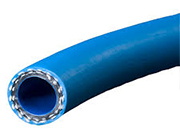
Flow Rate Calculator - Pressure and Diameter | Copely
Our Flow Rate Calculator will calculate the average flow rate of fluids based on the bore diameter, pressure and length of the hose. The effects on the predicted water flow are then given in three graphs where in turn two of the variables are kept constant.

Pressure Loss Calculator | Pacific Hoseflex
By using calculator below we find that 1400 ft 3 /hour. corresponds to 175 gal/min. Then we plot the 175 gpm on the X-axis of the chart below until we “hit” the line for 2″ hose ID, then by going over horizontally to the Y-axis, we find that Pressure Loss per foot of hose will be about 3.7 psi.
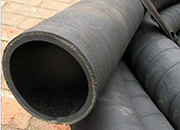
Hose Flow Rate Calculator - Calculator Academy
07.10.2021· Hose Flow Rate Formula. The following formula is used to calculate a hose flow rate. Q = (1946.6 * D ^ 1.857 * (P/L) ) ^ .54. Where Q is the volumetric flow rate in gallons per minute (GPM) D is the internal diameter of the hose. P is the dynamic pressure of water. L is the length of the hose.
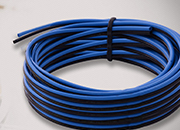
Hose Flow & Sizing - Green Line Hose
Water Hose Flow Rates… Air Line Sizing PSI at Hose Nominal Hose Diameters Inlet 1/2 5/8 3/4 1 11/4 11/2 2 21/2 3 4 6 8 20 4 8 12 26 47 76 161 290 468 997 2895 6169 30 5 9 15 32 58 94 200 360 582 1240 3603 7679 40 6 11 18 38 68 110 234 421 680 1449 4209 8970
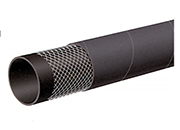
Fire Pump Sizing and Selection | phcppros
14.03.2014· To calculate pump gpm, two sizing methods are available, the standpipe method and the sprinkler area calculation. In a fully sprinklered structure with standpipes, NFPA 14 (2010): Standard for the Installation of Standpipes and Hose Systems says that the first standpipe requires 500 gpm and each additional standpipe requires 250 gpm, up to a maximum of 1,000 gpm.
Fire Pumping Calculations: Every Pump Operator''s Basic
01.10.2012· Learn fire pumping calculations and equations. Sign in. If the friction loss in 100 feet of 2½-inch hose is 15 psi, When calculating friction loss for hose sizes other than 2½ inch,

How to calculate a fire sprinkler system
The long way - by hand. In this article, will demonstrate some of the basics for carrying out fire sprinkler calculations by the long hand method with just the aid of a scientific calculator or our own hydraulic calculator - Hcal2 which you can freely download from our website.. We will for this example use simple three sprinklers and three pipes which would of course be part of a much larger
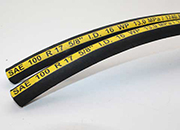
fire hose psi calculator sizes chart - podniesinscy.pl
fire hose psi calculator sizes chart Hose Size Selection Nomograph – RYCO Hydraulics 2018/06/20· The line crosses Hose Bore between -12 and -16 on “All Other Dash Sizes” side of Hose Bore axis, so a -16 hose is required.
Friction Loss Calculator - fire department
This Friction Loss Calculator is very helpful for training new fire engine operators. Enter the GPM, Hose Size, and Length to calculate the friction loss.
Hydrant Flow Test Calculator | Hose Monster
Hydrant Flow Test Calculator. The Hydrant Flow Test Calculator measures the rated capacity at 20 psi of a fire hydrant. The rated capacity calculation is useful in determining the total water supply at a given point in the hydrant or water main. The calculation offers more useful information than the test flow by itself and is used by insurance