epr a water hose cm in
Hosecraft USA Rubber Hoses of Every Style
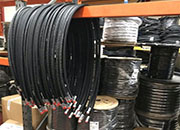
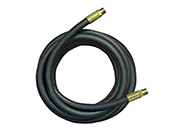
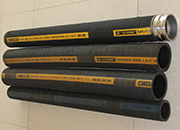
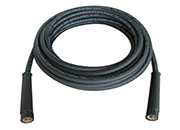
RW1-AS WATER HOSE ASSELY RW1-AS is a quality general service water hose assely designed for a wide range of appliions. It is provided here in 5/8", 3/4", & 1" diameters as a 25ft, 50ft, & 100ft asselies with brass GHT garden hose fittings. RMA class C. -40F to 190F
Electron paramagnetic resonance - Wikipedia
Electron paramagnetic resonance (EPR) or electron spin resonance (ESR) spectroscopy is a method for studying materials with unpaired electrons.The basic concepts of EPR are analogous to those of nuclear magnetic resonance (NMR), but the spins excited are those of the electrons instead of the atomic nuclei.EPR spectroscopy is particularly useful for studying metal complexes and organic radicals.
14.5 Fluid Dynamics | University Physics Volume 1
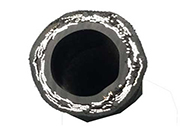
Water is moving at a velocity of 2.00 m/s through a hose with an internal diameter of 1.60 cm. (a) What is the flow rate in liters per second? (b) The fluid velocity in this hose’s nozzle is 15.0 m/s. What is the nozzle’s inside diameter?
Answers - The Most Trusted Place for Answering Life''s
Answers is the place to go to get the answers you need and to ask the questions you want
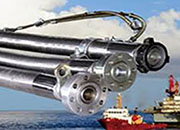
(Get Answer) - A water hose 2.00cm in diameter is used to
08.02.2021· A water hose 2.00cm in diameter is used to fill a 20.0-Lbucket. If it takes 1.00min to fill the bucket, what is the speed vat which water moves through the hose? (Note: 1L =1000cm 3 ) (b) The hose has a nozzle 1.00 cm in diameter. Find the speed of the water at the nozzle.
Physics 103 CQZ1 Solutions and Explanations
Physics 103 CQZ1 Solutions and Explanations 1. All fluids are: A. gases B. liquids C. gases or liquids D. non-metallic E. transparent Matter is classified as solid, liquid, gas, and plasma. Gases adjust volume and shape to the container.
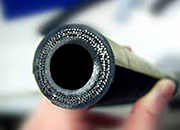
Steve Boddeker''s 122 Physics Homework - CPP
Water flows through a fire hose of diameter 6.35 cm at a rate of 0.0120 m 3 /sec. The fire hose ends in a nozzle of inner A force of magnitude 2.00 N acts on the plunger, making water squirt horizontally from the needle. Determine the speed of the medicine as it leaves the needle’s tip. ans 12.6m/s. A 1 v 1 = A 2 v 2. 2.50 x 10⁻⁵ v 1 = 10
CHAPTER 3 WATER SUPPLY SYSTEM - JICA
CHAPTER 3 WATER SUPPLY SYSTEM 3.1 General 3.1.1 Components of the Priority Projects The stage I of the augmentation of Salaulim Water Supply Scheme (WSS) was selected as the priority projects from the urgency point of view because it has the most serious problem for water shortage, as described in Volume II Main Report: Master Plan.
Water Pressure and Pressure Forces - Pearson
314 cm 2 7.07 cm 2 ≤= 2.22 * 104 N 500 N 7.07 cm 2 = W 314 cm 2 P A= F 31p # 322>44 cm2 P B= W 31p # 2022>44 cm2 F= 500 N 1100 N 21100 cm 2= F120 cm 2 2.3 Surfaces of Equal Pressure The hydrostatic pressure in a body of water varies with the vertical distance measured from the free water surface. In general, all points on a horizontal surface
OpenStax College Physics Solution, Chapter 12, Problem 13
Water is moving at a velocity of 2.00 m/s through a hose with an internal diameter of 1.60 cm. (a) What is the flow rate in liters per second? (b) The fluid velocity in this hose''s nozzle is 15.0 m/s. What is the nozzle''s inside diameter?
Water Pressure and Pressure Forces - Pearson
314 cm 2 7.07 cm 2 ≤= 2.22 * 104 N 500 N 7.07 cm 2 = W 314 cm 2 P A= F 31p # 322>44 cm2 P B= W 31p # 2022>44 cm2 F= 500 N 1100 N 21100 cm 2= F120 cm 2 2.3 Surfaces of Equal Pressure The hydrostatic pressure in a body of water varies with the vertical distance measured from the free water surface. In general, all points on a horizontal surface
Rubber Grades & Specifiions, KurwaRubber
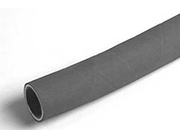
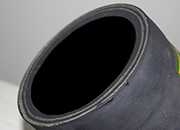
EPR is a copolymer of ethylene and propylene, while EPDM is a terpolymer coining ethylene, propylene and a diene monomer. It also has excellent water and steam resistance, maintains its flexibility at low temperatures, features excellent resistance to alkalis, acids and oxygenated solvents.
Electron Paramagnetic Resonance (EPR) Spectroscopy
01.01.2017· Electron paramagnetic resonance (EPR) spectroscopy, also called electron spin resonance, is a technique that is used to study chemical species with unpaired electrons. EPR spectroscopy plays an important role in the understanding of organic and inorganic radicals, transition metal complexes, and some biomolecules.
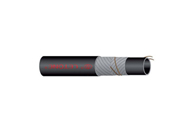
Water flowing through a garden hose of diameter 2.74cm
30.10.2018· Water flowing through a garden hose of diameter 2.74cm fills a25.0L bucket in 1.50 min a) what is the speed of the water leaving the end of the hose? B)a - 1146…
Ch. 12 Problems & Exercises - College Physics for AP
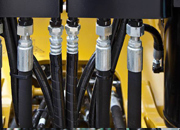
Water is moving at a velocity of 2.00 m/s through a hose with an internal diameter of 1.60 cm. (a) What is the flow rate in liters per second? (b) The fluid velocity in this hose''s nozzle is 15.0 m/s. What is the nozzle''s inside diameter?
SOLVED:Fluid Mechanics | Physics for Scientists and
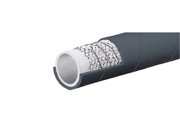
The water supply of a building is fed through a main pipe 6.00 $\mathrm{cm}$ in diameter. A 2.00 -cm-diameter faucet tap, loed 2.00 $\mathrm{m}$ above the main pipe, is observed to fill a $25.0-\mathrm{L}$ container in 30.0 $\mathrm{s}$ . (a) What is the speed at which the water leaves the faucet?
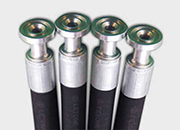
Water, with a density of 1000 kg/m3, flows out of a spigot
Water, with a density of 1000 kg/m3, flows out of a spigot, through a hose, and out a nozzle into the air. The hose has an inner diameter of 2.25 cm. The opening in the nozzle that the water comes out of has a diameter of 2.00 mm.
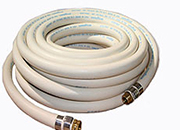
Electron paramagnetic resonance - Wikipedia
Electron paramagnetic resonance (EPR) or electron spin resonance (ESR) spectroscopy is a method for studying materials with unpaired electrons.The basic concepts of EPR are analogous to those of nuclear magnetic resonance (NMR), but the spins excited are those of the electrons instead of the atomic nuclei.EPR spectroscopy is particularly useful for studying metal complexes and organic radicals.
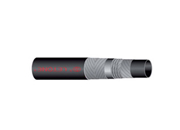
Hosecraft USA Rubber Hoses of Every Style
RW1-AS WATER HOSE ASSELY RW1-AS is a quality general service water hose assely designed for a wide range of appliions. It is provided here in 5/8", 3/4", & 1" diameters as a 25ft, 50ft, & 100ft asselies with brass GHT garden hose fittings. RMA class C. -40F to 190F
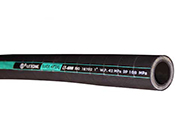
A water hose 2 cm in diameter is used to fill a 20 litre
Click here👆to get an answer to your question ️ A water hose 2 cm in diameter is used to fill a 20 litre bucket. If it takes 1 minute to fill bucket with watch velocity it leaves the hose ,
Ch. 12 Problems & Exercises - College Physics | OpenStax
Water is moving at a velocity of 2.00 m/s through a hose with an internal diameter of 1.60 cm. (a) What is the flow rate in liters per second? (b) The fluid velocity in this hose’s nozzle is 15.0 m/s. What is the nozzle’s inside diameter?
Physics 103 CQZ1 Solutions and Explanations
Physics 103 CQZ1 Solutions and Explanations 1. All fluids are: A. gases B. liquids C. gases or liquids D. non-metallic E. transparent Matter is classified as solid, liquid, gas, and plasma. Gases adjust volume and shape to the container.
OpenStax College Physics Solution, Chapter 12, Problem 23
And this gives 1.58 times ten to the six pascals is the pressure difference between the two sections of the hose. And then, in part b, the second section of the hose is the nozzle. And the water is going to have some speed coming out of there. And this nozzle has this diameter that we know. And so we have this speed calculated up here.
Electron paramagnetic resonance - Wikipedia
Electron paramagnetic resonance (EPR) or electron spin resonance (ESR) spectroscopy is a method for studying materials with unpaired electrons.The basic concepts of EPR are analogous to those of nuclear magnetic resonance (NMR), but the spins excited are those of the electrons instead of the atomic nuclei.EPR spectroscopy is particularly useful for studying metal complexes and organic radicals.
[SOLVED] A water hose 2 cm in diameter is used to fill a
Click here👆to get an answer to your question ️ A water hose 2 cm in diameter is used to fill a 20 litre bucket. If it takes 1 minute to fill the bucket, then the speed v at …
OpenStax College Physics Solution, Chapter 12, Problem 13
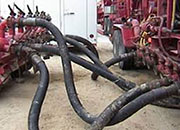
Water is moving at a velocity of 2.00 m/s through a hose with an internal diameter of 1.60 cm. (a) What is the flow rate in liters per second? (b) The fluid velocity in this hose''s nozzle is 15.0 m/s. What is the nozzle''s inside diameter?
CHAPTER 3 WATER SUPPLY SYSTEM - JICA
CHAPTER 3 WATER SUPPLY SYSTEM 3.1 General 3.1.1 Components of the Priority Projects The stage I of the augmentation of Salaulim Water Supply Scheme (WSS) was selected as the priority projects from the urgency point of view because it has the most serious problem for water shortage, as described in Volume II Main Report: Master Plan.
What is EPR? | Customizable CPAP Comfort Settings - Easy
03.11.2021· What is EPR? EPR, or Its integrated humidifier ensures that you won''t wake up with a dry mouth or water in your mask. But it doesn''t stop there -- it goes above and beyond. With AutoRamp and SmartStart, the AirSense will start automatically at a low pressure as soon as you put on your mask.
Solved: (a) A water hose 2.00 cm in diameter is used to
(a) A water hose 2.00 cm in diameter is used to fill a 20.0-L bucket. If it takes 1.00 min to fill the bucket, what is the speed υ at which water moves through the hose? (Note: 1 L = 1 000 cm 3.) (b) The hose has a nozzle 1.00 cm in diameter.
Solved: A Water Hose 2.00 Cm In Diameter Is Used To Fill A
A water hose 2.00 cm in diameter is used to fill a 20-liter bucket. If it takes 20 minute to all the bucket, what is the speed at which water moves through the hose Answer must be purely numerical and in m''s