oil resistance b
Dielectric oils alog - REPSOL
BIO ELECTRA oil bases its high resistance to oxidation on the presence of molecular structures which crystallise at higher temperatures than those found in mineral oils. • Gassing tendency. BIO ELECTRA oil acts as a “gas absorber” when compared with mineral oils, which act as a …

Chemical Resistance Guide - Gilson Eng
- (Nitrile) (NBR) is a general purpose oil resistant polymer known as nitrile rubber. BUNA-N is a copolymer of butadi-ene and acrylonitrile. BUNA-N has good solvent, oil, water and hydraulic fluid resistance. It displays good compression set, abrasion resistance and tensile strength.
Oil - Wikipedia
Etymology. First attested in English 1176, the word oil comes from Old French oile, from Latin oleum, which in turn comes from the Greek ἔλαιον (elaion), "olive oil, oil" and that from ἐλαία (elaia), "olive tree", "olive fruit". The earliest attested forms of the word are the Mycenaean Greek 𐀁𐀨𐀺, e-ra-wo and 𐀁𐁉𐀺, e-rai-wo, written in the Linear B syllabic script.

Transformer Oil Types | T Transformer
Transformer oil (also known as insulating oil) is a special oil with good electrical insulation properties and is stable at high temperatures. Despite the apparent superiority of naphtha-based oil, paraffin oil remains the most commonly used type of oil in transformers worldwide.
Chemical Resistance Table - Parker Hannifin
Chemical Resistance Table Chemical Resistance Table KEY E = Excellent G = Good C = Conditional X = Unsatisfactory Trade ACETIC ACID 10 % E E E E X B B X E F B E E X E E ACETIC ACID ASTM OIL NO. 2 X E X X E X G E E X X E E G E E ASTM OIL NO
Oil viscosity - PetroWiki
04.06.2015· Oil viscosity. PetroWiki. Jump to navigation Jump to search. Absolute viscosity provides a measure of a fluid’s internal resistance to flow. For liquids, viscosity corresponds to the informal notion of "thickness". For example, honey has a higher viscosity than water. Any calculation involving the movement of fluids requires a value of viscosity.

Chemical Compatibility Guide - Ingersoll Rand
B=Good C=Fair D=Poor *NotAvailableinallmodels **Maximumtemperaturelimits arebasedonmechanical stressonly. Certain chemicalscansignificantly reducemaximumsafe RUBBER TPE operatingtemperature. COMPOUND Code ** Life Resistance (Seats) Service Service Solvents Ketones/Acetates Hydrocarbons Aromatic/Chlorinated Petroleum/oils-40°to 225°F-20°to
CHEMICAL RESISTANCE GUIDE - Primary Fluid
resistance to sulfur-bearing compounds is particularly useful ins alt water disposal lines, crude oil piping and low pressure gas gathering systems. Valves are suitable for service up to 195ºF [90ºC]. PVDF [Kynar®] [Polyvinylidene Fluoride] The working temperature range of PVDF valves is -40ºF up to 250ºF [-40ºC - 120ºC]. POLYCARBONATE
Dielectric oils alog - REPSOL
BIO ELECTRA oil bases its high resistance to oxidation on the presence of molecular structures which crystallise at higher temperatures than those found in mineral oils. • Gassing tendency. BIO ELECTRA oil acts as a “gas absorber” when compared with mineral oils, which act as a …

CHEMICAL RESISTANCE GUIDE - Primary Fluid
resistance to sulfur-bearing compounds is particularly useful ins alt water disposal lines, crude oil piping and low pressure gas gathering systems. Valves are suitable for service up to 195ºF [90ºC]. PVDF [Kynar®] [Polyvinylidene Fluoride] The working temperature range of PVDF valves is -40ºF up to 250ºF [-40ºC - 120ºC]. POLYCARBONATE

Cover Grades Oil resistance - Dunlop Conveyor Belting
Oil resistance. When oil penetrates rubber it causes it to swell and distort. This results in serious tracking and steering problems as well as premature wear and, ultimately, total belt failure. The oils, fats, and greases that have these damaging effects can be divided into two distinct sources – mineral and vegetable/animal.

The Importance of Oil Resistant Cables | Lapp Tannehill | News
NBR has good oil and chemical resistance [1]. It is used in the automotive and petroleum industries for oil and engine fuel transport equipment, for machinery pumps and in disposable nonlatex
CHEMICAL RESISTANCE CHART
RESISTANCE CHART RATINGS — CHEMICAL EFFECT A — No effect—Excellent B — Minor effect—Good 2. Citric Acid ACAD B B D Citric Oils ACB A D Coffee AB C A Copper Chloride C D B A A Copper Cyanide AD A CB B Copper Fluoborate D B AB A Copper Nitrate B AD A Copper Sulfate (5% Solution) AD AB C
Transformer Oil Types | T Transformer
Transformer oil (also known as insulating oil) is a special oil with good electrical insulation properties and is stable at high temperatures. Despite the apparent superiority of naphtha-based oil, paraffin oil remains the most commonly used type of oil in transformers worldwide.

Cover Grades Oil resistance - Dunlop Conveyor Belting
Oil resistance. When oil penetrates rubber it causes it to swell and distort. This results in serious tracking and steering problems as well as premature wear and, ultimately, total belt failure. The oils, fats, and greases that have these damaging effects can be divided into two distinct sources – mineral and vegetable/animal.
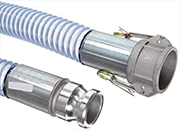
Polysulfone Chemical Compatibility Chart - Industrial Spec
Polysulfone Chemical Compatibility Chart ver 04-Feb-2018 Industrial Specialties Mfg. industrialspe A = Little or no interaction B = Slight interaction X = Not recommended Room temperature = 20°C or 68°F

Cover Grades Oil resistance - Dunlop Conveyor Belting
Oil resistance. When oil penetrates rubber it causes it to swell and distort. This results in serious tracking and steering problems as well as premature wear and, ultimately, total belt failure. The oils, fats, and greases that have these damaging effects can be divided into two distinct sources – mineral and vegetable/animal.
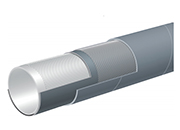
Oil resistance standards and test methods - Dunlop
Dunlop belts used in the quarry industry have very high tear resistance and covers that are exceptionally resistant to wear caused by abrasion. Cement Because of the potentially huge costs of lost production due to belt failure, we have developed conveyor belts that provide the best possible assurance of reliability and long operational life.

Cover Grades Oil resistance - Dunlop Conveyor Belting
Oil resistance. When oil penetrates rubber it causes it to swell and distort. This results in serious tracking and steering problems as well as premature wear and, ultimately, total belt failure. The oils, fats, and greases that have these damaging effects can be divided into two distinct sources – mineral and vegetable/animal.
Fluid Resistance Guide - ResearchGate
4 Fluid Resistance of Viton® Fluoroelastomer (continued) Ammonium Sulfate 23 (73) 7 days B B401 98 103 –3 1 Ammonium Sulfide 23 (73) 7 days B B401 70 74 –2 4 Amyl Acetate 20 (68) 2 days 308

Oil viscosity - PetroWiki
04.06.2015· Oil viscosity. PetroWiki. Jump to navigation Jump to search. Absolute viscosity provides a measure of a fluid’s internal resistance to flow. For liquids, viscosity corresponds to the informal notion of "thickness". For example, honey has a higher viscosity than water. Any calculation involving the movement of fluids requires a value of viscosity.
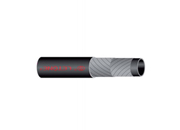
Chemical Resistance Chart | Plastics International
Legend. A = No Attack, possibly slight absorption. Negligible effect on mechanical properties. B = Slight attack by absorption. Some swelling and a small reduction in mechanical likely. C = Moderate attack of appreciable absorption. Material will have limited life. D = Material will decompose or dissolve in a short. Aq. = Aqueous Solution.
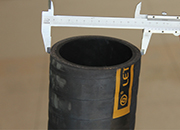
EPDM CHEMICAL RESISTANCE CHART A=SATISFACTORY …
EPDM CHEMICAL RESISTANCE CHART A=SATISFACTORY B=BE EXPECTED TO CHANGE C=UNSATISFACTORY Chemical Resistance Rating at 68°F Acetone A Ammonia A Ammonia Solution A Ammonium Carbonate A Amyl Acetate B Amyl Alcohol A Animal Oil B ASTM No. 1-3 Oil C Benzene C Butane C Butyl Alcohol B Butyl Acetate B Butylene Calcium Hydroxide A Carbonic Acid Gas B
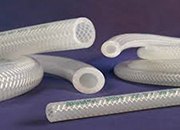
Oil - Wikipedia
Etymology. First attested in English 1176, the word oil comes from Old French oile, from Latin oleum, which in turn comes from the Greek ἔλαιον (elaion), "olive oil, oil" and that from ἐλαία (elaia), "olive tree", "olive fruit". The earliest attested forms of the word are the Mycenaean Greek 𐀁𐀨𐀺, e-ra-wo and 𐀁𐁉𐀺, e-rai-wo, written in the Linear B syllabic script.
Palm oil may retest resistance zone of 5,032-5,048 ringgit
18.10.2021· SINGAPORE: Palm oil may retest a resistance zone of 5,032-5,048 ringgit per tonne, a break above which could lead to a gain into a range of 5,187-5,274 ringgit.
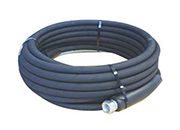
Amazon.jp: Loctite 5970 Oil Resistance 300ml by Loctite
Loctite 5970 Oil Resistance 300ml by Loctite Currently unavailable. Click here for details of availability. We don''t know when or if this item will be back in stock. Loctite 5970 300ml oil resistance › …
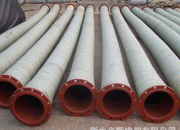
Chemical Resistance, SBR, EPDM, NBR
Gas oil 23 442 Gelatine 40 111 Glacial acetic acid 10 50 4 3 4 Glacial acetic acid 25 100 4 4 4 Glacial acetic acid 50 50 4 4 3 Glucose 80 111 is only a recommendation, which gives no obligation or warranty on account of Trelleborg Pipe Seals B.V. CHEMICAL RESISTANCE Concentration % Grade 1
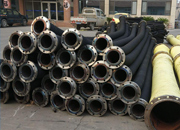
Chemical Resistance, SBR, EPDM, NBR
Gas oil 23 442 Gelatine 40 111 Glacial acetic acid 10 50 4 3 4 Glacial acetic acid 25 100 4 4 4 Glacial acetic acid 50 50 4 4 3 Glucose 80 111 is only a recommendation, which gives no obligation or warranty on account of Trelleborg Pipe Seals B.V. CHEMICAL RESISTANCE Concentration % Grade 1
Fluid Resistance Guide - ResearchGate
4 Fluid Resistance of Viton® Fluoroelastomer (continued) Ammonium Sulfate 23 (73) 7 days B B401 98 103 –3 1 Ammonium Sulfide 23 (73) 7 days B B401 70 74 –2 4 Amyl Acetate 20 (68) 2 days 308

Investigation into SARS-CoV-2 Resistance of Compounds in
14.04.2020· 2.1. Composition of Garlic Essential Oil. The density and refractive index of the garlic essential oil (A. sativum L.) are 1.019 g·mL –1 and 1.467, respectively.The results of the analysis of physicochemical properties in this study agree well with the results (1.025–1.029 g·mL –1; 1.464–1.469) reported by Boukeria et al. 16. The qualitative and quantitative composition of the garlic